Where the Wind Blows Them
London
Listening to the sounds and voices of the slow, everyday violence of the UK’s Hostile Environment, ‘all our lines are busy’, trying to patch the endless holes in a leaking bucket, ‘you made yourself intentionally homeless’. Learning from scattered seeds—small and fragile—carried by the wind, surrendering their fate to wherever it blows, or the snail that leaves its shell behind for other insects to make it their home, in a quiet, generous gesture.
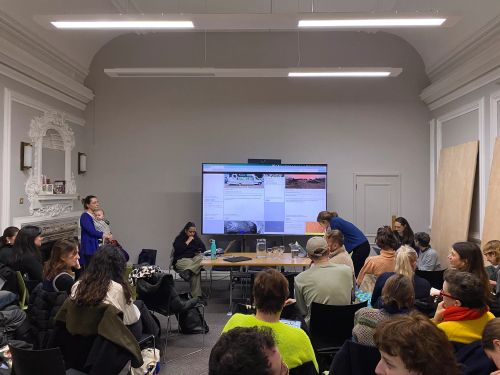
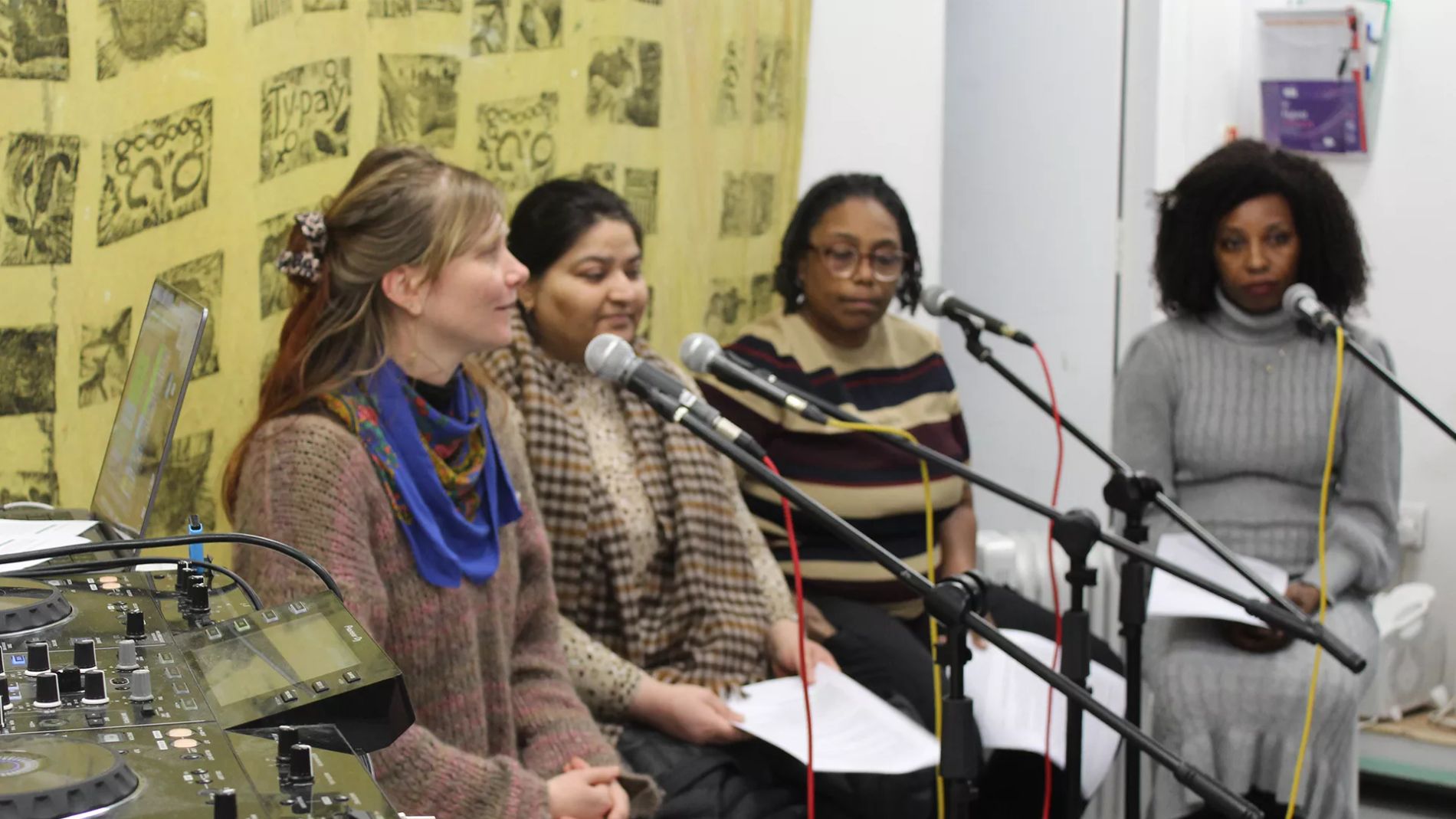
In this creative storytelling session, supposedly ‘academic’ concepts around migration are interwoven with poetic conversations and shared stories of lived experiences of survival and resistance from the cracks of the UK’s hostile environment. These are combined with music, as well as sound recordings and quotes gathered from women who came together for a creative research residential on the ‘No Recourse to Public Funds’ policy1. The residential formed part of Rebekka Hölzle’s doctoral research with a group of London-based migrant women activists, three of whom – Amanda, Faiza, and Mary – joined the performance as storytellers and creative collaborators.
The creative conceptualisation of the session emerged through a collaboration between artist Rachel Margetts and interdisciplinary researcher Rebekka Hölzle. Both are committed to exploring artistic and academic practices that use different creative media to craft more collaborative and ‘care-full’ forms of storytelling and research with communities targeted by hostile migration and welfare regimes. The performance playfully blurs the boundaries between academia, activism, and the arts. It is thought of as an invitation to re-imagine and expand the formats and voices represented at academic conferences, and consider how stories and knowledges are disseminated and shared within and beyond academic settings.
Recordings available via Rebekka Hölzle’s Soundcloud. The research project that this performance was based upon formed part of Rebekka Hölzle’s PhD at Birkbeck university, and the fieldwork took place in partnership with the South London Refugee Association. Rebekka is in receipt of an ESRC grant for her PhD. The residential was funded by the OSUN Foundation’s Engaged Research grant .